THE PROBLEM
Drains can't keep up
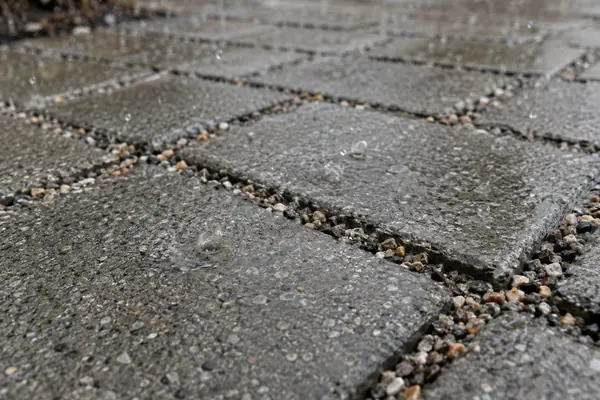
Guidance says much of the 2007 flooding happened because drains could not cope. Paving gardens adds to the water flowing to them.
See the numbers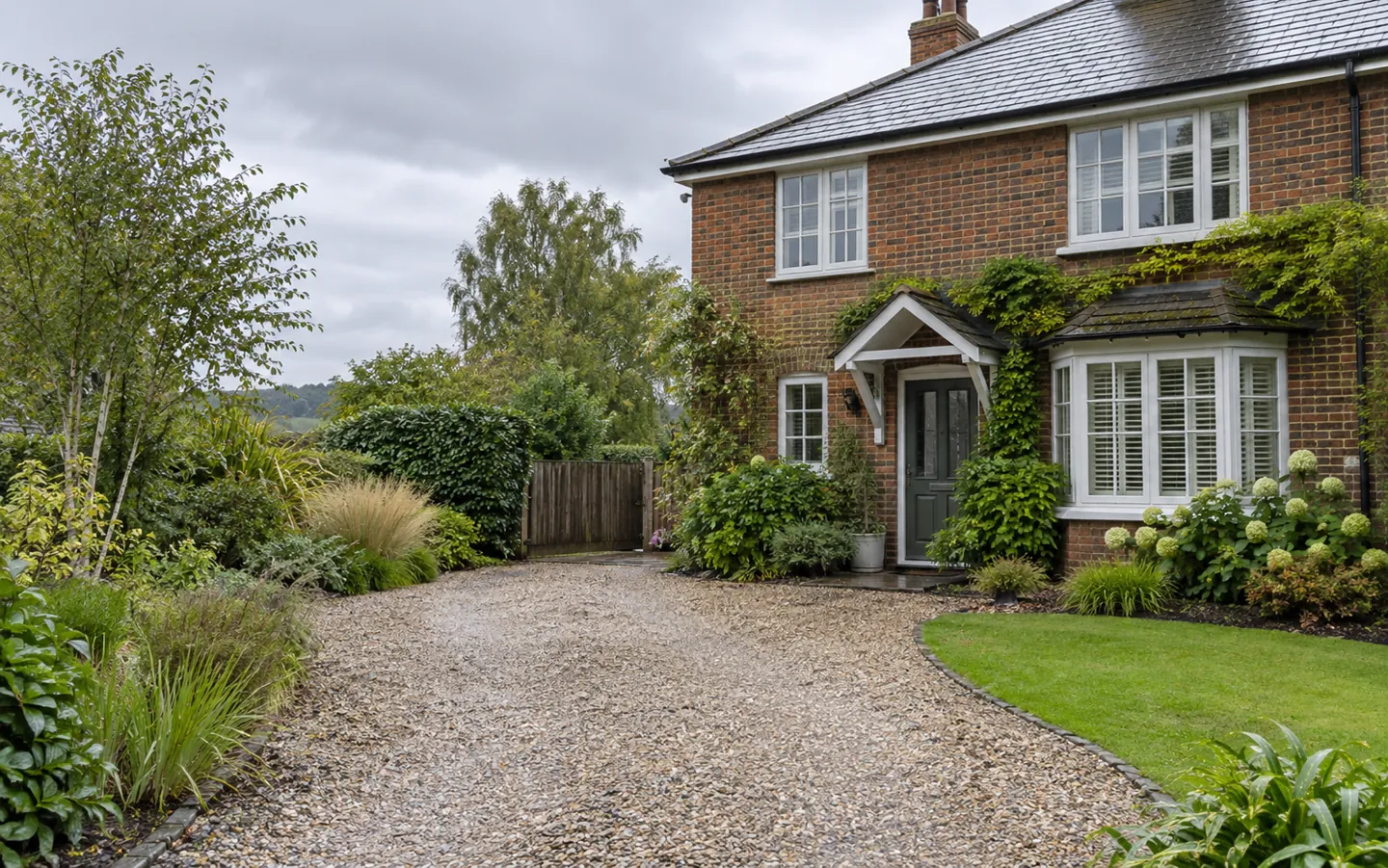
 doodlesurface
WHAT THE GUIDANCE SAYS
5 m² the planning line
A paved garden sends every drop to the drain.
One driveway may not seem to matter, but a whole street of them can overwhelm drains that were never built for it. England's guidance on front gardens is simple: choose a surface the rain can get through, or send the water somewhere it can soak away.
Updated
Check a drivewayTHE SHORT ANSWER
Hard paving makes surface water worse.
There are easy ways to keep a driveway permeable.
THE PROBLEM
Guidance says much of the 2007 flooding happened because drains could not cope. Paving gardens adds to the water flowing to them.
See the numbersPERMEABLE
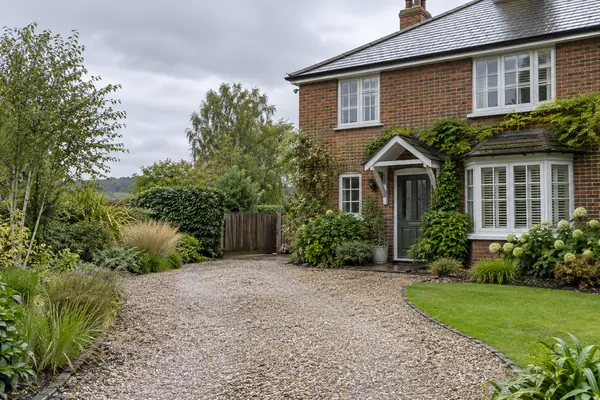
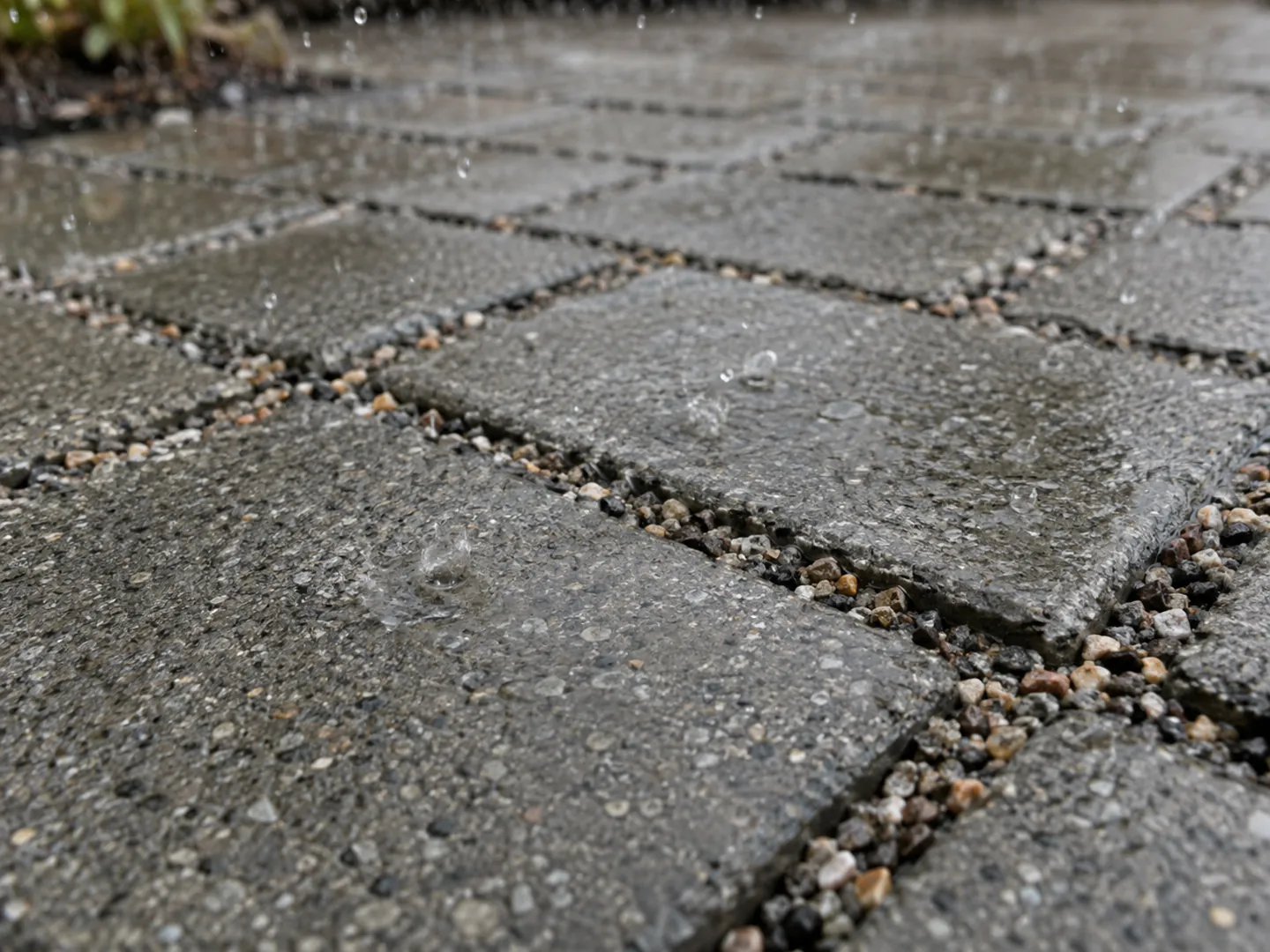
Gravel, permeable block paving and porous asphalt let rain soak through into the ground instead of running off.
Check a drivewayRAIN GARDENS
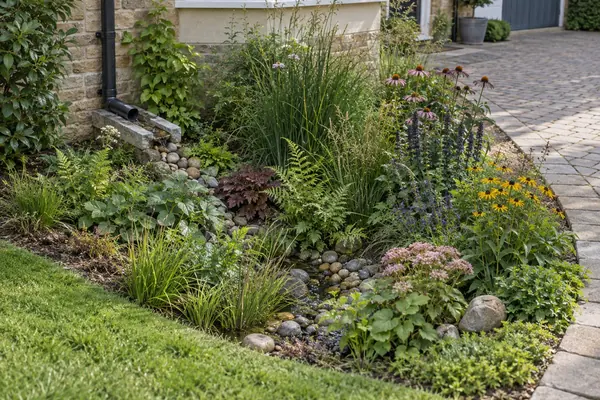
A hard drive can still work if water runs to a lawn, border, soakaway or rain garden to drain naturally.
How to do itA QUICK DRIVEWAY CHECK
Pick a front garden surface to see what the guidance says. The bar shows how much it adds to runoff and whether planning permission comes into it.
Based on guidance on the permeable surfacing of front gardens for householders in England. General information, not planning or legal advice.
TWO NUMBERS WORTH KNOWING
Both figures come from the Environment Agency's
national flood risk assessment for England.
4.6 million
Properties at risk of surface water flooding
The 2024 national assessment puts around 4.6 million properties in England in areas at risk of flooding from surface water.
AT RISK · ENVIRONMENT AGENCY
1.1 million
Properties at high risk from surface water
About 1.1 million are in areas at high risk, around twice as many as are at high risk from rivers and the sea.
HIGH RISK · ENVIRONMENT AGENCY
With climate change, the assessment estimates properties at risk from surface water could rise to 6.1 million between 2040 and 2060. Much of the recent rise reflects better mapping, not a real-world increase.
FOUR STEPS TO TRY
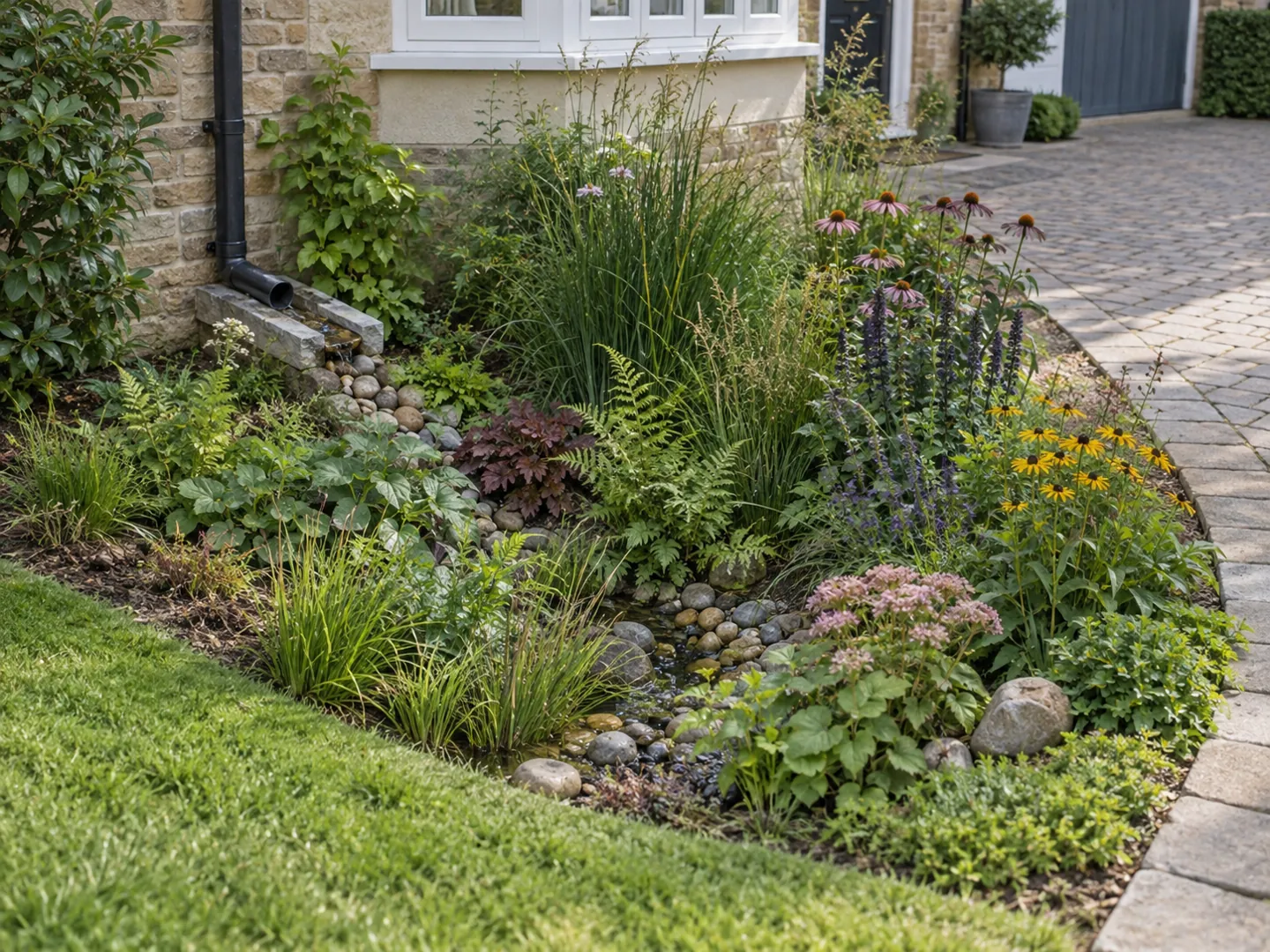
These follow the government guidance on front gardens, which notes that permeable driveways do not necessarily cost more or need a lot of maintenance.
Use the GOV.UK long term flood risk service to see the risk from surface water in your area.
Gravel, reinforced grass, permeable blocks or porous asphalt all let water through.
Slope hard paving towards a lawn, border, soakaway or rain garden rather than the road.
Planted areas soak up rain and help cool the house, which bare paving cannot do.
MORE THAN FLOODING
Hard surfaces collect oil, petrol and brake dust that wash into drains. Many drains run straight to streams and rivers, and in older areas rainwater can overflow sewers, sending untreated sewage into watercourses.
Paving also stops rain topping up underground aquifers, and loses the cooling effect of water evaporating from soil and plants, which can make local temperatures rise.
Questions
In England, not if you use a permeable surface or direct the rain to a lawn or border. Laying traditional impermeable paving over more than 5 square metres without that does need permission.
One that lets rain soak through into the ground, such as gravel, reinforced grass, permeable concrete block paving or porous asphalt, built on an open stone sub-base.
A small planted dip designed to manage rainwater, for example water directed from a driveway, letting it soak slowly into the ground.
Use GOV.UK's service to check the long term flood risk for an area in England, including surface water. It covers areas, not whether an individual property will flood.
Flooding when heavy rain cannot drain away fast enough. England's 2024 assessment puts around 4.6 million properties in areas at risk from it.
Sources
ABOUT THIS NAME
doodlesurface.com is part of the DoodleSale portfolio. It isn't in an auction right now, but you can ask about leasing it.